

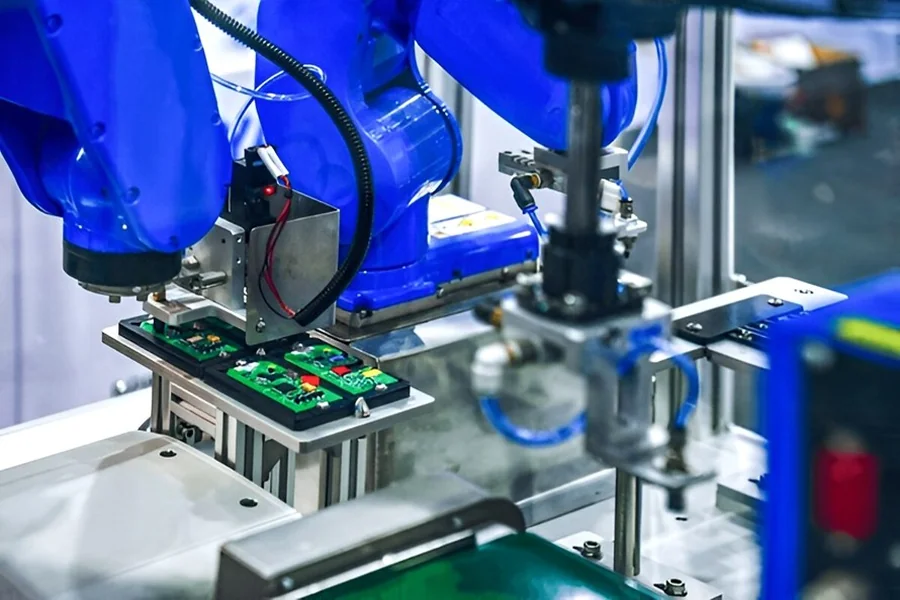
LED PCB assembly is at the center of modern lighting technology. Whether it’s home lighting, automotive headlights, industrial fixtures, display panels, or smart illumination systems, every high-quality LED product relies on a precisely assembled LED PCB. The reliability, brightness, and lifespan of an LED depend heavily on how well the PCB is designed, fabricated, and assembled. That is why LED PCB assembly requires deep technical understanding, advanced equipment, and strict process control.
Understanding LED PCB Assembly
LED PCB assembly refers to the process of attaching LED chips and supporting electronic components onto a printed circuit board designed specifically to manage heat and ensure stable electrical performance. LEDs generate more heat than most electronic components, so the board material and assembly method must be chosen carefully. Aluminum, copper, and sometimes FR4 substrates are used depending on thermal demands.
During the assembly process, solder paste is applied, components are placed with automated machines, soldered using reflow, and inspected using optical and X-ray systems. The goal is to ensure that every LED is aligned correctly and able to perform consistently over thousands of operating hours.
Why LED PCB Assembly Requires High Precision
LEDs are sensitive components, and even a small assembly error can affect brightness or color performance. Precision matters because LEDs in a lighting strip, panel, or module must illuminate uniformly. Poor assembly leads to uneven brightness, flickering, early degradation, or heat build-up.
Thermal Management Challenges
Heat kills LEDs faster than anything else. If the assembly doesn’t provide good thermal contact between LEDs and the PCB, temperatures rise and lifespan decreases drastically.
Solder Joint Quality
LEDs require clean, stable, void-free solder joints. If the reflow temperature is too high or too low, LEDs may dim, shift in color, or detach from pads.
Placement Accuracy
LED chips must be placed in perfect alignment to ensure uniform light distribution, especially in high-density lighting modules and display backlights.
Types of PCBs Used in LED PCB Assembly
Aluminum-Core PCBs
Aluminum is the most common and ideal for high-power LED applications. Its superior heat dissipation properties help keep LEDs cool.
Copper-Core PCBs
Used in demanding industrial and automotive applications where heat loads are extremely high.
FR4 PCBs
Used for small, low-power LED boards or indicator lighting where heat generation is minimal.
Choosing the right PCB material is critical for ensuring reliable LED performance over time.
LED PCB Assembly Process Explained
PCB Preparation
Boards are inspected, cleaned, and prepared for printing. Any contamination can weaken solder joints.
Solder Paste Application
A stencil printer deposits solder paste exactly on component pads. The accuracy of this step defines solder joint quality.
Component Placement
LEDs, resistors, drivers, and other components are placed using advanced pick-and-place machines. LEDs require gentle handling and precise alignment.
Reflow Soldering
Boards pass through a controlled heating profile. LEDs require carefully tuned temperatures to avoid damage or color shift.
Automated Inspection
AOI and X-ray inspection identify misalignment, poor soldering, and hidden defects beneath LED pads.
Functional Testing
LED boards undergo brightness tests, thermal tests, and electrical performance checks to ensure consistency and reliability.
Applications of LED PCB Assembly
Consumer and Smart Lighting
LED bulbs, tube lights, panel lights, and RGB smart lighting rely on stable LED PCB assemblies for consistent output.
Automotive LED Systems
Daytime running lights, brake lamps, interior lighting, and headlamps use high-precision LED assemblies to meet safety standards.
Industrial Lighting
Floodlights, streetlights, warehouse fixtures, and commercial lamps require durable LED PCBs designed for long operating hours.
Display and Signage
Billboards, LED screens, and advertising panels depend on high-density LED assemblies that deliver bright and uniform light.
Medical and Specialized Uses
Surgical lights, laboratory illumination, and horticulture grow lights require LED assemblies with strict quality control and stable long-term performance.
Why High-Quality LED PCB Assembly Matters
High-quality LED assembly ensures efficient heat dissipation, longer lifespan, and stable brightness. When LEDs are assembled correctly, they operate cooler, last longer, and maintain uniform color and illumination. This also reduces maintenance costs and improves energy efficiency.
Reliable LED PCB assembly also enhances product performance, ensuring that lighting systems remain consistent even in demanding industrial or outdoor environments. Whether you are designing prototypes or mass-producing LED-based products, the assembly quality directly impacts your success in the market.
Choosing the Right Partner for LED PCB Assembly
LED products require an assembly partner that understands lighting design, thermal management, and material selection. A skilled manufacturer ensures accurate placement, stable soldering, strict inspection, and final testing. This leads to better reliability, lower failure rates, and higher customer satisfaction.
If you want to develop lighting products that meet industry expectations and deliver long-term performance, working with a trusted printed circuit board assembler is the best way to ensure strong quality, dependable engineering, and consistent results for your LED PCB assembly projects.
