

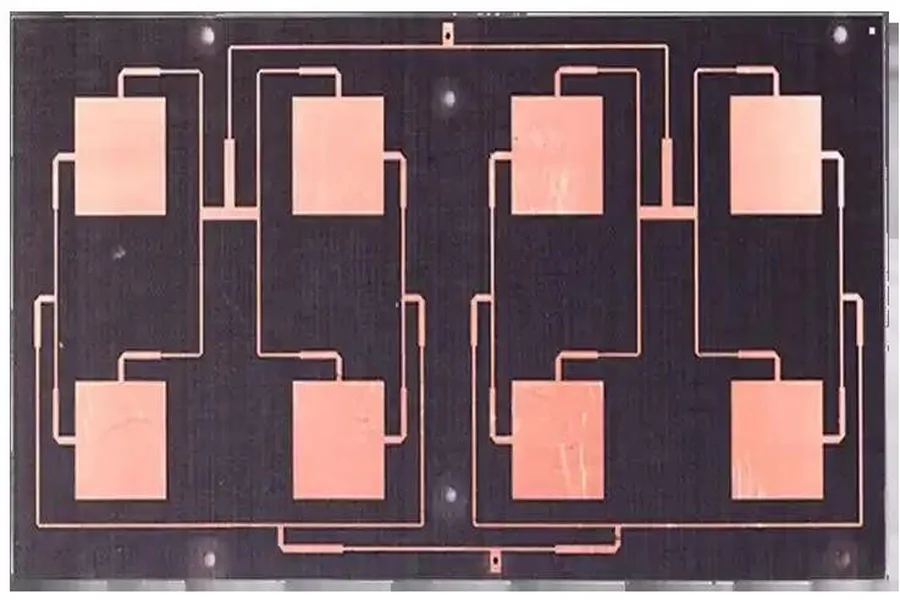
A Teflon Printed Circuit Board is a specialized type of PCB that uses polytetrafluoroethylene (PTFE) as its base material instead of the standard FR4 or other laminates. Teflon is a synthetic fluoropolymer of tetrafluoroethylene, well-known for its excellent electrical insulation, chemical resistance, and thermal stability. These properties make Teflon PCBs a preferred choice in industries that require high-frequency signal transmission, exceptional performance in extreme conditions, and long-term durability.
Properties of Teflon Printed Circuit Board
One of the most notable features of a Teflon PCB is its low dielectric constant (Dk), which remains stable across a wide range of frequencies. This stability ensures minimal signal loss, making it suitable for high-speed and high-frequency applications such as RF and microwave circuits. The dielectric loss tangent is also extremely low, which means less energy is dissipated as heat, allowing signals to travel more efficiently.
Teflon also has a very low coefficient of thermal expansion (CTE), meaning it can withstand significant temperature changes without expanding or contracting excessively. This thermal stability is crucial in aerospace, defense, and industrial electronics, where components may face extreme environments.
Additionally, the chemical resistance of Teflon makes these PCBs suitable for applications exposed to harsh chemicals, moisture, and environmental factors. They do not absorb water easily, which prevents performance degradation in humid conditions.
Advantages of Teflon PCBs in High-Performance Applications
The most significant advantage of using Teflon as a PCB base material is its ability to handle high frequencies without compromising signal quality. Unlike FR4 boards, which may experience signal distortion at very high frequencies, Teflon PCBs maintain integrity and precision in data transmission.
Another advantage is heat resistance. Teflon PCBs can operate effectively in temperatures exceeding 200°C, making them ideal for automotive electronics near engines, satellite communications, and military radar systems.
The lightweight nature of Teflon also benefits industries where weight reduction is critical, such as aerospace and telecommunications. Even though Teflon is lighter than many other laminates, it does not compromise on durability or performance.
Applications of Teflon Printed Circuit Boards
Due to their high performance, Teflon PCBs are found in specialized fields where standard boards cannot meet the technical demands. Common applications include:
- RF and Microwave Circuits: Teflon’s low dielectric loss ensures clear and accurate signal transmission.
- Satellite Communication Systems: Ideal for long-distance signal transmission with minimal loss.
- Aerospace Electronics: Withstands extreme temperatures and vibrations in flight systems.
- Military and Defense Systems: Used in radar, navigation, and communication devices where performance is mission-critical.
- Medical Imaging Equipment: Ensures accuracy in devices like MRI machines that rely on high-frequency signals.
Challenges in Working with Teflon PCBs
While Teflon offers many benefits, it also presents some manufacturing challenges. PTFE is softer than FR4, which can make drilling holes more difficult. Specialized equipment and expertise are needed to prevent deformation during the fabrication process.
The cost of Teflon PCBs is generally higher than standard PCBs due to the material itself and the advanced manufacturing processes required. For this reason, they are typically used only in applications where their unique properties justify the added expense.
The Future of Teflon PCB Technology
As industries such as 5G, aerospace, and defense continue to evolve, the demand for Teflon Printed Circuit Boards is expected to grow. With the expansion of high-frequency applications, these boards will play an even greater role in ensuring efficient, reliable, and stable performance in critical systems. Manufacturers are also working on improving processing techniques to make Teflon PCBs more cost-effective and accessible for a broader range of uses.
Choosing the Right Manufacturing Partner
The production of Teflon PCBs requires precision, specialized equipment, and deep material knowledge. Factors such as layer count, copper thickness, and hole drilling techniques all need careful consideration to maintain the integrity of the final product. Therefore, partnering with an experienced Teflon PCB manufacturer is crucial to ensure quality, consistency, and reliability.
A professional manufacturer will not only have the necessary technical expertise but also a proven track record of producing high-performance Teflon PCBs for industries like aerospace, telecommunications, and defense. This ensures that the final product meets both technical and regulatory standards, while also delivering the performance your application demands.
