

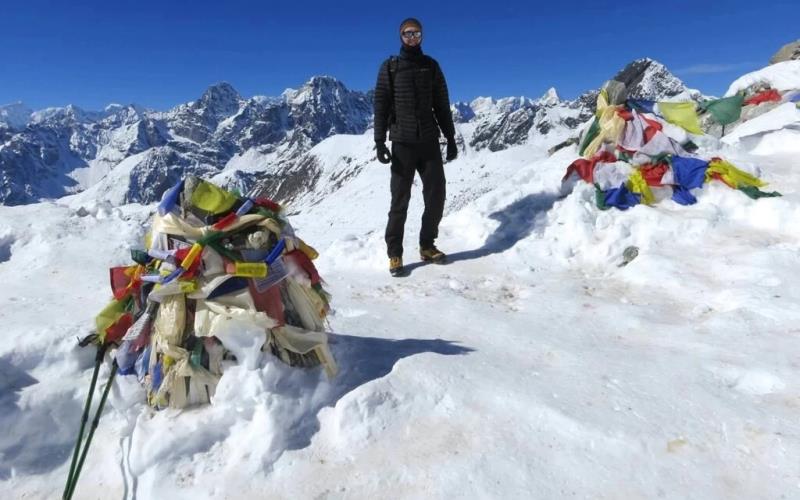
With the Everest Three High Passes Trek, trekkers can have both of these: scores and spirit. Here some of the most inspiring views on any trail anywhere argues with all sorts of difficult conditions underfoot in the world for thrill. As trekkers journey through the heart of the Everest region, they will cross three of the highest passes in the Himalayas—the Kongma La, Cho La, and Renjo La—each providing a unique and unforgettable experience. This trek is not for the faint of heart, but with the help of Sherpa expeditions, it can become a challenging and memorable experience that brings you closer to the stunning peaks of Everest, Lhotse, Nuptse, and Makalu. At the heart of the trek is a requirement for both physical strength and mental application; trekkers will traverse rough hill trails, icy paths, and nearly vertical ascents while climbing to heights in excess of 5,500 meters. However, with Sherpas leading the way, trekkers need not worry about their safety or knowledge: these native guides know the lay of the land well having been there before, and will also provide warm comfort in bitter cold. It is Sherpas who play an absolutely crucial role in managing the risks attached to trekking at high altitudes, particularly the occurrence of altitude sickness. By organizing rest days and adjusting the pace to suit the altitude’s slow and progressive nature, they see that proper acclimatization is achieved among trekkers’ bodies. Additionally, Sherpas have more to offer than their role as safety experts; they also bring a store of rich cultural information to the trek. They talk with you about spiritual matters in this region, tell stories of its Buddhist traditions, and explain Best time for Everest Three Pass Trek and why you see many prayer flags at monasteries along major trails. This cross-fertilization of cultural knowledge gives genuine depth to the trek, turning your pleasure into not simply a physical challenge but an adventure in learning. Throughout the trek, Sherpa expeditions could be relied upon to help trekkers prepare for every aspect of the adventure. They navigate through high mountain passes and manage daily chores such as meals, accommodation, and rest. They make sure trekkers pack the right kind of gear for this harsh environment, always thinking about guidebooks and maps appropriate to local topography so no detail goes overlooked. Sherpa Expeditions is also in charge of the logistics, making the trek safer and more comfortable so that you can concentrate on an amazing journey ahead. The views from each pass take your breath away. From the wind-swept ridges of Kongma La to the icy expanse of Cho La, the Everest Three High Passes Trek leads trekkers into some of the most far-reaching and least spoiled areas in today ‘s world. At each step, the vast mountains seem to approach nearer ever nearer, as if within one ‘s grasp, and success more real. The joys are not only physical but also emotional and spiritual, indeed. Ultimately, the very experience itself is just as long-lasting with Sherpa expeditions conducting the Everest Three High Passes Trek as any reflection of commitment can produce. The trek is not only about a destination; it is an exploration of the road itself, the chance to learn from Sherpas, and a feeling that somehow all these mountains are in our own backyard. It’s an adventure that stays with you long after your return home.
Once people try the Everest Three High Passes Trek, they will find it a fantastic adventure; albeit somewhat difficult and long also with experienced hikers in mind. The terrain is tough and breathtaking both–it gives one the special opportunity to observe not just Mount Everest but also Lhotse, Makalu, Cho Oyu, and a series of other high peaks. Completing the realm of the Everest Three High Passes Trek is the crossing of three high passes, each over 5300 meters: Renjo La, Cho La, and Kongma La. Compared to the wider used route for Going to Everest Base Camp, this way affords a higher degree of seclusion and fewer people. The most important points en route like Everest Base Camp, and Kala Patthar are still included. There is a variety of terrain to pass over: steep pitches, rock-strewn tracks, glaciers, and even snow-covered fields. You physically have to be fit to undertake what is a very demanding trek but the sense of achievement that it leaves one with is unmatched. An ideal choice for not only mountain enthusiasts but also anyone looking to relax and take a break with one of the greatest treks in all the world.
Why You Should Choose A Sherpa Expedition for Your Adventure
Picking a Sherpa-led the route to do the 3 High Passes Trek in Everest in Nepal will not only make your trip safer, but also more enjoyable. The region’s guide is Sherpas. They know that no others do the terrain, weather, and altitude challenges that occur there. Their expertise in negotiating the rough paths of the region and in crossing high—altitude passes guarantees that you will have a safe and successful trek. Their training is first-rate. If there are symptoms of high—altitude illness among those on the trek, Sherpas know how to cope with them. Besides that too, Sherpa people who serve as guides have a deep understanding of the traditional Sherpa way, Buddhist thought, and practices as they have grown up with both. Their possible presence in the event of trouble offers a layer of security, since they are familiar with the remote and sometimes harsh conditions on the trail. Thus it is Thanks to this warm and hospitable nature of theirs that Sherpas enable trekkers to feel relaxed and at home, not só much taking part in an adventure as being given a cultural exchange in an atmosphere akin to one big family. And the trip becomes not only one of adventure, but also a more reliable, culturally reaping experience.
The Three High Passes: Key Challenges and Rewards
The toughest terrains and greatest altitude passes characterize the Everest Three High Passes Trek. Renjo La, Cho La, and Kongma La—these three passes each conduct their own special examination of trekkers’ physical strength and tenacity in different aspects of difficulty. Renjo La, at 5,360 meters, is a steep rocky ascent in granite chutes interspersed with small caves. At its top one can look outbastard Himalayas Mt Everest to Southeastern and Western flanked beautiful peaks. Cho La (5,420 meters) the second pass, requires a technical crossing over ice and snow. From May (earliest) to September back in early October most trekkers find it physically demandingdangerously during winter months. Kongma La, the highest of the three passes at 5,535 meters, is the most challenging because everything is so steep up here making for difficult in good weather wind direction. However, despite all its difficulties, the rewards are rich. As well as surpassing panoramic views of the world’s tallest peaks, each pass crossed transports you into another whole environment with different cultures and scenery. Along the way, there will also be opportunities to learn about Sherpa culture, visit Buddhist monasteries, and wander through ancient villages, making life a more complete and changing voyage. In completing the Everest Three High Passes Trek, one’s strength, bravery, and love of high-altitude exploration are all put to the test.
Preparation to Save Your Life Trek
Every Three High passes must be well Prepared. This trek is aerobically demanding. Most of your days you will hike long distances with steep grading and high-altitude passes to cross. Before trekking, trekkers should be in excellent physical condition. Cardio and weight training combined with vigorous hiking builds overall fitness, gradually preparing the body for all that the trek will throw at it. Trekking under such conditions is tough on both the mind and body. Packing the correct gear is essential to successful treks like this in Nepal. Things like good trekking boots, proper clothing for high altitude environments including down jackets which are essential at night, sleeping bags rated to carry through cold evenings (or a liner for your sleeping bag), and other important items such as a backup light source (headlamp) a set of trekking poles or staffs used mainly in less accessible terrain), first aid kits. Proper recovery time at high altitude will help you to avoid altitude sickness later; therefore rest days are necessary and you will climb increasingly higher altitude areas gradually- often at low speed climbing down into lower terrain. Lastly, have all necessary permits such as a TIMS card and Sagarmatha National Park Permit purchased before leaving home in order to streamline your trip. By preparing physically, mentally, and logistically, trekkers can ensure a safe and enjoyable experience in the Everest region.
Sherpa Guides: Their Experience and What They Can Do for Your Route
Without the help of Sherpa guides, an Everest Three High Passes Trek would be unthinkable. These local experts understand the terrain, the weather there, and a myriad of distinctions that make up his or her region: they are thoroughly familiar Sherpa guides play a vital role in keeping trekkers on the right path. This is particularly true in sections of trail that are remote or challenging to find. Sherpas are also trained in high-altitude at aid first aid and are vital in recognizing and managing altitude sickness. This malaise can occur at high elevations, such as those found on the passes Sherpas bring their knowledge of local culture to bear in other ways as well. Because they are indigenous people who live in this area of Nepal, they have a feeling for what it is like in different seasons sharing with visitors information about how Sherpas have lived for generations, Buddhist beliefs, and the historical background of the region. In this way, not only physically arduous – but also culturally very fulfilling: we learn something new at each step along the journey from our local companions as well as experiencing just possessed weather and scenery Sherpas are helpful in carrying gear, negotiating rough terrain,n and offering encouragement when the tough get going; they thus provide invaluable logistical support to trekkers. Their presence means that there is safety and comfort, while from a cultural standpoint, it offers an invaluable perspective on the country which one may not be able to obtain during other forms of travel Trekking with Sherpa guides not only adds a dimension of rarity to the trip but also makes it a richer experience.
The trek takes trekkers across three of the most famous and challenging high-altitude passes in the world
Everest Three Passes hiking routes Renjo La, Cho La, and Kongma La. Starting from Lukla, the trek follows a classic route through the Everest region in Nepal. You pass through Namche Bazaar, Tengboch,e, and Dingboche, places that provide both acclimatization and glaring views of your surroundings as you walk. It’s entirely removed from the route to Everest Base Camp thereafter. The first, Renjo La (5,360m), gives an incredible view of Everest and the Gokyo Valley. The second Cho La (5,420m) is technically challenging and often requires crossing ice and snow from the Gokyo Valley to link up its hinterland with that of the Everest Base Camp route. Done with Everest Base Camp, trekkers then face Kongma La (5,535m), the highest and toughest one of them all. This pass affords panoramic views up and down the Khumbu Glacier and on either side, compensating you for what you owe it. The route is clear and, remote mostly going through glacial valleys, boulder fields of moraine, and forks, but for some short sharply continental stretch ice steps or even as time permits pulls along other suitable gear suitable pulled-together slopes. To always maintain physical readiness and be ready for the uncertain weather in the high Himalayas, trekkers need to be very fit.
The Acclimatization Strategies of High Mountains
High-altitude trekking contains a vital component: acclimatization. Trekking the Everest Three High Passes Trail is no exception. As Tanzania climbs above 5500 meters the air becomes thinner and the body must adjust itself to live on less oxygen. To avoid altitude sickness-which can be quite dangerous planning a good acclimatization strategy becomes essential. This includes moving up slowly with rest days in between stages, allowing bodies that are not used to an increased pressure to gradually get used to the new conditions. Sherpa guides are essential in this process as they are blank veterans concerning pacing the trek in order that the trekker does not exceed his limits too quickly. One technique that many people use is “climb high, sleep low” –trekking up to a higher elevation during the day and coming back down to sleep at lower altitudes, so that your body has time for recovery. Drinking lots of water and food used to be part of that acclimatization strategy. Hill people keep to themselves but will occasionally display symptoms similar to a 25,000-foot altitude. Thus when a trekker displays signs of altitude sickness, such as headaches, nausea, or dizziness; the sherpa knows whether to slow the pace or descend lower in order to avoid serious complications. With these strategies, therefore, trekkers can experience the mountain to their satisfaction.
Essential Gear and Packing List
Everest trekking To always be well prepared on an Everest Three High Passes Trek, it is essential to know what gear you need in order to hike comfortably. At those high-altitude conditions, clothing and gear capable of withstanding the extreme cold and baking sun, and volatile weather are essential. Necessary items of kit include a high-quality sleeping bag able to cope with extremely cold conditions, a down jacket, insulated gloves, and trekking boots with good ankle support. Because temperature is controlled through layering, your clothing should consist of cool-max bottoms and tops, fleece jackets that absorb moisture (unlike cotton!), windbreakers that are water repellant outside their breathability, and lastly waterproof haul bags. Plus, if things are icy or steep, a pair of trekking poles often prove useful for balance. You need a good backpack, plus water bottles or a hydration system, and of course a first-aid kit for any daily trekking plan. For sun protection, also sunglasses, a hat and sunscreen must be part of your heading gear; don’t forget to pack the headlamp with extra batteries! On the individual level, items such as cameras, toiletries, and power banks can all make your trek more comfortable. Sherpa guides often give advice on what equipment to bring for the trek, making sure trekkers have everything they need to meet the requirements of very high altitude and in case something goes wrong survive on their own out there.
Safety Measures and Emergency Support
Three Pass Trek Nepal For safety reasons, Sherpas are an integral part of a trek along three high mountain passes in the Everest region. First aid trained and equipped to deal with every aspect of high altitude risks, from just the feeling of something being wrong with oneself up to major collapses at over 8,000m above sea level for breathing disorders– this is what makes them indispensable to trekkers’ welfare throughout their trek course. Emergency evacuation plans are always in place -the Sherpas know the quickest ways down to warmer areas or nearby villages if someone falls ill or is injured. Portable communication devices such as satellite phones are carried so that if necessary people who lost chips inadvertently tossed in bags can contact rescue teams, medical help, and so on. Furthermore, Sherpas keep an eye on the health of trekkers: They look for early symptoms of altitude sickness and alter the pace to avoid expiration. Climatic conditions can also change rapidly in the Everest area, and Sherpas are adept at reading cloud patterns turning around the schedule to escape dangerous weather such as snow storms or heavy rainfall. In addition to their professional skills, Sherpas contribute greatly to trekkers ‘ mental and physical well-being. They make certain that the walkers are confident and fully prepared mental preparedness of being confronted with difficulties during the trek.
Cultural Insights: Sherpa Traditions and Local Communities
In the Everest region, there is a rich cultural heritage, of which the Sherpas are the core. Traveling on the Everest Three High Passes Trek, tourists can better understand the ways that the Sherpas live their lives and their customs,, beliefs, and habits. It is deeply integrated with Buddhism, as the Sherpas’ way of life reflects spiritual principles, and this is evidenced in prayer flags, chortens, and monasteries found along the route. Hiking in the region may offer opportunities for visitors to see Tengboche with its monastery, one of the religious centers of the district, and listen to rituals that have been passed down from generation to generation. Their feelings towards the mountains is as much spiritual as physical, and coming out into this wild land will give one a purer appreciation of what life in all its forms really is. Sherpas are also famous for their warm hospitality and rich community spirit. Travelers will often get to know local customs in the villages they walk through. This cultural exchange adds layers of meaning to the trek. Given this cultural encounter, tourists are able to develop a deeper appreciation of the special region from which they come.
What to Expect on a Day-to-Day Basis?
Everest Three Passes guide Challenges and rewards follow one after another on the Everest Three Passes route, and participating trekkers, basically speaking, should be prepared for aching legs and a satisfied mind. The day usually begins rather early, with tourists setting out before dawn to benefit from clearer skies, more comfortable temperatures (higher than 20 C on a July morning), and less chance of sunstroke later in the day. Trails up to the high passes are steep and rocky, with slippery ice, and tricky ascends. Trekkers could be walking anything from 5 to 8 hours depending on what day it is, taking long rests en route to grab good views of scenery. Sherpa guides fix a pace that everyone can keep up with comfortably, preventing tourists from overexerting themselves while also offering opportunities for proper acclimatization. Traditionally, trekkers on the Three Passes route must work hard physically every day. On top of this, they will receive a cultural lesson and an opportunity to appreciate some of the local colors if they make use of trekking tour arrangements. In the evenings, hikers will take a hearty dinner and spend the night at guest houses or tent stops, where they can rest and prepare for the next day’s trip. Despite the physical rigors, however, the wonderful scenery, fellow hiker camaraderie and a sense of accomplishment each evening make the Three Passes experience unforgettable.
Conclusion: Suppose you embark on an unforgettable adventure from there.
The Everest Three High Passes Trek is so unusual that it will take you a lifetime to forget. The journey is a test not only for your physical strength, but as well as one that offers rich rewards in cultural development and self-awareness. With experienced Sherpa guides on hand, trampers can be confident about safely negotiating the hazards of altitude trekking in strange areas and lovingly sampling the unique spirit and culture of this particular park’s geography. The point of the journey is more than just getting to the summit; it’s about approaching mountains and respecting the traditions passed down for generations by the Sherpa people. From the exhilarating challenge of crossing high passes to those still, thoughtful days and nights in remote villages, every day on the trek offers something new to remember. Whether you are an experienced trekker or a beginner, the Everest Three High Passes Trek will leave a deep impression on life and provide that unforgettable adventure.
